Accounting · September 21, 2023 · 3 min read
The cloud in accounting – advantages and disadvantages
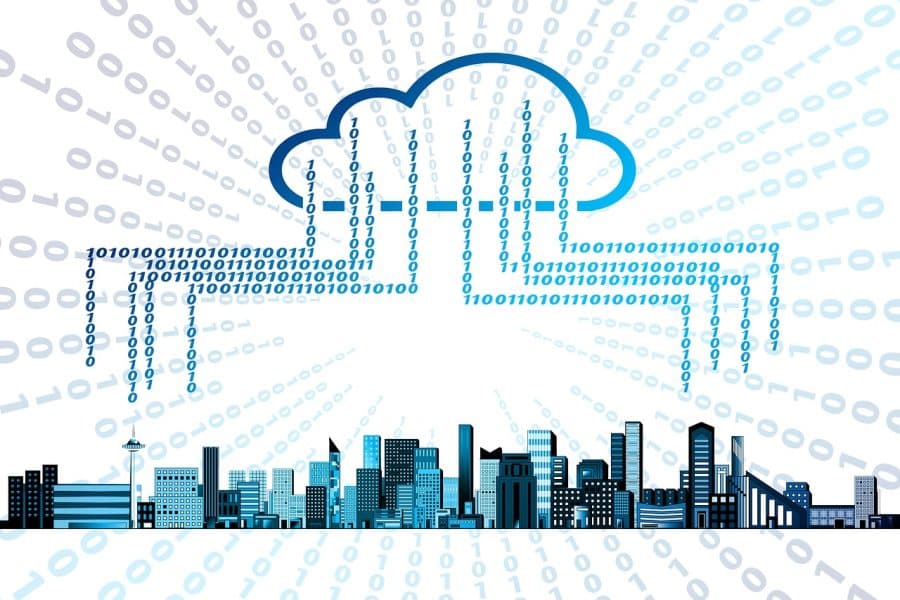
Advantages and disadvantages of using the cloud to handle business administration and accounting
In today’s era of digital transformation, many companies are turning to cloud solutions to handle their business administration and accounting. The cloud brings a range of benefits that can modernise business processes and make them more efficient. However, as with any technology, the cloud also comes with challenges and potential disadvantages that need to be considered before it is implemented.
Advantages:
- Access from anywhere: Being able to access data from anywhere allows people to work remotely or from home. This is particularly useful in today’s globalised world and in situations that call for a quick response to change. It also makes international cooperation easier.
- Automatic backup: Automatic data backup minimises the risk of data being lost in the event of unexpected incidents. This increases clients’ satisfaction with, and trust in, the company. At the same time, it can mean considerable savings on data recovery costs.
- Updates and maintenance: Users do not have to invest time or resources in manual updates. This reduces the need for IT resources and ensures that the software is always up to date and secure. Automatic updates also reduce the risk of errors.
- Cooperation and integration: The cloud makes it easier to share information between teams and departments. This supports effective collaboration and minimises duplicated work. Integration with other tools also increases productivity and process efficiency.
- Security: Advanced security features in the cloud protect data against unauthorised access. This reduces the risk of sensitive information leaking and of potential penalties. Companies are therefore better able to meet regulatory requirements.
- Scalability: Cloud solutions can be adapted to a company’s current needs. This makes it possible to expand the business efficiently without large investments in infrastructure. Scalability therefore also contributes to the company’s long-term sustainability.
Disadvantages:
- Dependence on the internet: If the internet connection goes down, data may become unavailable. This can cause delays in work and potential losses for the business. It is important always to have an alternative plan for accessing data.
- Security concerns: Even though cloud services can be secure, they are still a target for cyberattacks. It is important to monitor security protocols continuously. A data breach can have significant financial and reputational consequences.
- Cost of services: Although the initial costs may be lower, regular fees may in the end turn out to be the more expensive solution. It is important to assess the total cost of ownership (TCO) carefully before choosing a cloud solution. Hidden fees can also increase costs in the long term.
- Compatibility and integration: Integration problems can complicate the move to the cloud or its use. This can lead to costs for customisation or for developing new solutions. Not all existing systems or applications will necessarily be compatible with a particular cloud solution.
- Data ownership and control: Using external services can raise questions about control over data. Companies may feel that they have lost some control over their information. Contractual terms with providers may also limit a company’s options in the event of a dispute or when it needs to change provider.
While cloud solutions offer innovative and flexible approaches to handling business administration and accounting, it is important to approach them with a clear picture of their strengths and weaknesses. Every company should assess individually whether cloud services suit its specific needs and circumstances. Used correctly, the cloud can contribute significantly to a company’s success and growth, whereas wrong decisions in this area can lead to complications.
More articles
All articles →
Accounting · September 3, 2026
The Bilvao app: your accounting and finances in one place
Automated accounting, e-invoices and an e-postman, matching of bank payments, attendance tracking for payroll and online reporting. See what the Bilvao app offers.
Read article →
Accounting · September 1, 2026
In-house or external accountant: what really pays off for a company
In-house or external accountant? We compare costs, reliability and responsibility, and advise which solution really pays off for your company, and when. We can help.
Read article →
Accounting · August 30, 2026
Single-entry vs. double-entry bookkeeping: what is the difference and which to choose
Single-entry vs. double-entry bookkeeping without unnecessary theory: exactly how they differ, who each one applies to and which to choose depending on your legal form of business. We can help.
Read article →