Finance and financial management · December 2, 2021 · 2 min read
What is inflation?
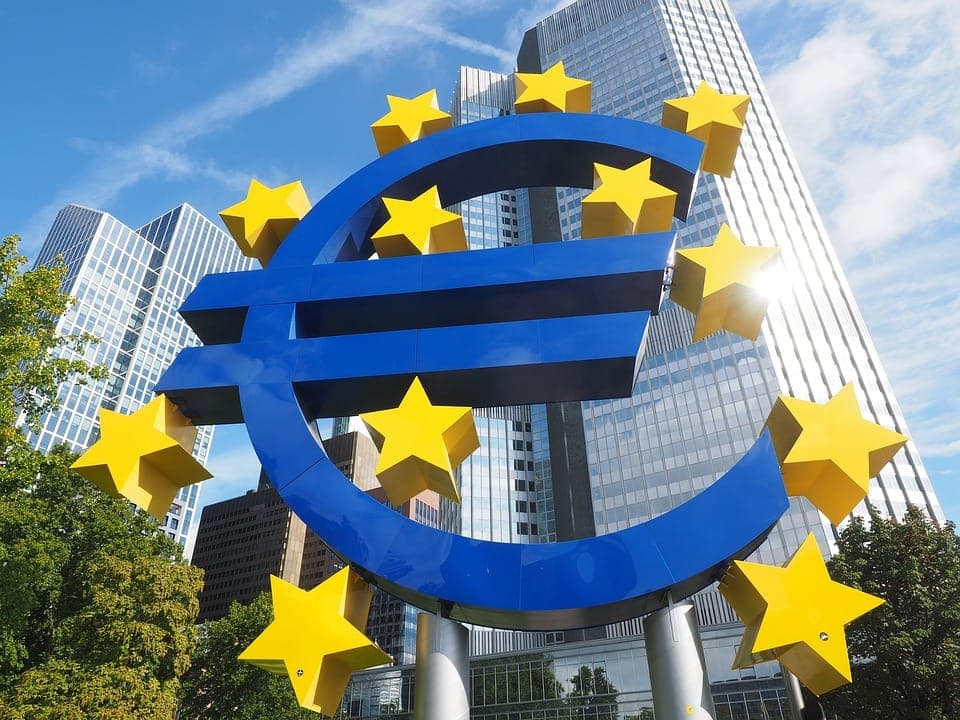
In recent years the word inflation has come up more and more often, and it has long since stopped being mentioned only in connection with the coronavirus pandemic, which, according to current data, has certainly set off a change in the economic trend for the coming years. In a market economy, inflation is the phenomenon of a long-term rise in the prices of goods and services. In practice this means that, for example, €1 will buy us less in the future than it does today. Or, from another angle – money is losing its value.
The Slovak Republic joined the eurozone in 2009 and began using the EURO € as legal tender on its territory. As a society, we agreed at the time that this currency has a certain value for us and that we would use it to exchange, trade and set the value of the other goods and services we come into contact with every day. All of today’s money works on this principle. Put simply, we humans believe that, for example, €20 will buy us goods worth €20. Today’s money has long ceased to be backed by gold as it once was, and our “paper” money has only as much value as we as a society are willing to give it.
Keeping inflation at an optimal level is the responsibility of the ECB – the European Central Bank, which seeks to maintain price stability in the eurozone as a whole and thus keep inflation at 2% over the medium term. This means it focuses on the overall rate of inflation in the eurozone. Since the eurozone economy is made up of several different countries, it is not uniform – and the same applies to inflation.
What is behind the current rise in inflation?
In September 2021, Slovakia recorded its highest inflation rate since 2004. Last month it rose by 5.1% year on year, and compared with August, price growth accelerated by 1.8%. This follows from the flash estimate for eurozone countries published today by Eurostat. The biggest contributor to rising prices, not only in Slovakia but also in the other eurozone countries, is energy, which moved from 15.4% in August to 17.4% year-on-year growth. Right after energy, the highest increase is seen in non-energy industrial goods, with year-on-year growth of 2.1%. Food, alcohol and tobacco are in a very similar position. Services have also become more expensive, by 1.7%.
As a result of rising inflation in these individual categories, overall inflation in the eurozone has now climbed to its highest level since the euro was created, at 4.9%. Unlike some analysts, the ECB continues to expect inflation to return to its target over the course of next year. ECB President Christine Lagarde recently said that the bank therefore does not plan to respond to the current spike by tightening monetary policy. “In this situation, tightening monetary policy would only deepen the negative effects on the economy,” the head of the ECB declared.
More articles
All articles →
Finance and financial management · February 9, 2026
Cash flow: how to manage the flow of money in a small company
Cash flow in a small company: how to monitor the flow of money, plan payments and avoid secondary insolvency. Practical tips and tools. We can help.
Read article →
Finance and financial management · February 7, 2026
How to put together a business plan that works
How to put together a business plan that works: structure, the financial plan and the most common mistakes. Get solid supporting material for your bank and investors. We can help.
Read article →
Finance and financial management · February 5, 2026
Financial indicators every entrepreneur should track
Financial indicators every entrepreneur should track: liquidity, profitability and debt explained simply. Measure the health of your company. We can help.
Read article →