Finance and financial management · September 22, 2021 · 4 min read
Trading on the stock exchange
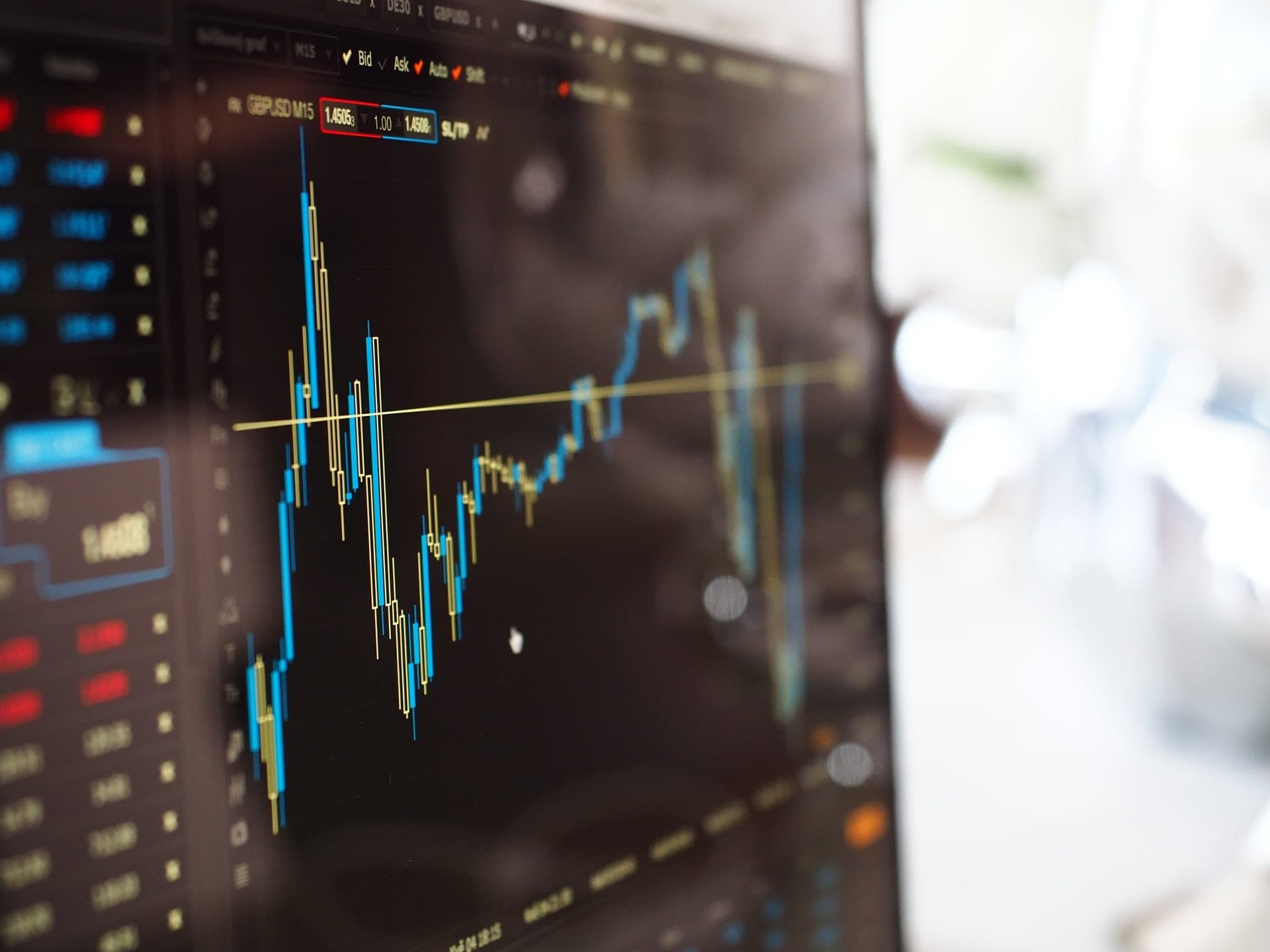
Last week, in our first article, we explained how doing business with cryptocurrencies works in Slovakia. Besides cryptocurrencies, shares, securities and other commodities can also be traded on an exchange. In this article, we look at the differences in how individuals and legal entities are taxed when trading on an exchange.
INDIVIDUAL
If you trade on an exchange as an individual and make short-term trades, where you buy and sell within a few days, weeks or months, you are required to pay tax on this income.
The personal income tax rate is:
- 19% on income up to €37,981.84
- the remainder, that is, income above €37,981.84, is taxed at a rate of 25%
In addition to income tax, an individual must also pay health insurance contributions of 14%. The relevant health insurance company notifies you of the amount of the contributions in its annual reconciliation after you have filed your tax return. That said, you can claim the health insurance contributions you have paid as a tax-deductible expense in the following year if you earn income from trading on an exchange. However, there is also the option of filing a supplementary tax return without a penalty and including the health insurance contributions paid in your tax-deductible expenses; the tax administrator will then refund you the difference. We recommend taking this approach.
The so-called non-taxable portion of the tax base cannot be applied to income from trading on an exchange. You could say that the total tax burden on trading on an exchange is therefore 33% or 39% respectively.
However, if you buy shares with the intention of investing for the long term and hold a given share for more than 1 year, the income from selling that share is exempt from tax.
LEGAL ENTITY
For legal entities, the tax rate is:
- 15% on income up to €49,740
- income above this amount is taxed at a rate of 21%
However, you only pay tax on the difference between costs and revenue. You can deduct the costs you incur in generating profits, such as various training courses, broker fees, a laptop, an internet connection, a telephone, possibly an office, and many others.
A legal entity also has the option of offsetting any loss against the company’s other income, as well as carrying it forward and deducting it in subsequent years. An individual has no such options.
Liability cannot be overlooked either. While individuals are liable with all their assets, legal entities are liable only up to the amount of their share capital.
TRADING ON THE COMPANY’S OWN ACCOUNT THROUGH A LIMITED LIABILITY COMPANY (S.R.O.)
Trading on own account means trading exclusively with the company’s own assets. A company’s own assets are represented by its equity, which consists of several components:
– the company’s share capital,
– capital funds,
– funds created from profit,
– retained earnings from previous years
In other words, a company may trade on an exchange, but it must not generate returns on funds that are not its own assets.
When trading on own account without a licence, the law also imposes several restrictions. The company cannot trade in commodity derivatives, emission allowances or their derivatives, cannot use high-frequency algorithmic trading, and cannot trade on own account by executing client orders.
Another disadvantage is that if the company carries out transactions on financial markets that are subject to Regulation (EU) No 648/2012 of the European Parliament and of the Council, it must obtain an LEI code before it starts investing and must ensure that all trades subject to this regulation are reported.
In Slovakia, an LEI number can be issued for you by the Central Securities Depository (CDCP) or directly by your broker. Issuing an LEI number and opening an account with a broker usually takes 3 weeks.
TRADING WITH OTHER PEOPLE’S FUNDS
To invest other people’s funds, you need authorisation from the National Bank of Slovakia (NBS) to operate as a securities dealer, a management company, a bank and so on.
We very much hope that this article has helped you understand the tax obligations that arise from trading on an exchange in Slovakia, and has shown you which particular way of doing business in this field is more advantageous here. If you already run a business as an individual or a legal entity, do not forget to entrust your accounting to experts with experience and hands-on practice. If you have any questions about business, accounting or finance, do not hesitate to contact us.
More articles
All articles →
Finance and financial management · February 9, 2026
Cash flow: how to manage the flow of money in a small company
Cash flow in a small company: how to monitor the flow of money, plan payments and avoid secondary insolvency. Practical tips and tools. We can help.
Read article →
Finance and financial management · February 7, 2026
How to put together a business plan that works
How to put together a business plan that works: structure, the financial plan and the most common mistakes. Get solid supporting material for your bank and investors. We can help.
Read article →
Finance and financial management · February 5, 2026
Financial indicators every entrepreneur should track
Financial indicators every entrepreneur should track: liquidity, profitability and debt explained simply. Measure the health of your company. We can help.
Read article →