Finance and financial management · October 5, 2023 · 6 min read
Who has to record sales through eKasa and who does not?
The ERP Act (Act No. 289/2008 Coll. on the Use of Electronic Cash Registers, as amended) sets out precisely which entrepreneurs are required, and which are not required, to record their sales through an eKasa cash register and send them to the Financial Administration (Finančná správa).
How can an entrepreneur decide? Every entrepreneur has two options.
- ORP (formerly the classic cash register, now the ONLINE cash register): A cash register from a certified supplier that records sales and sends them to the Financial Administration portal.
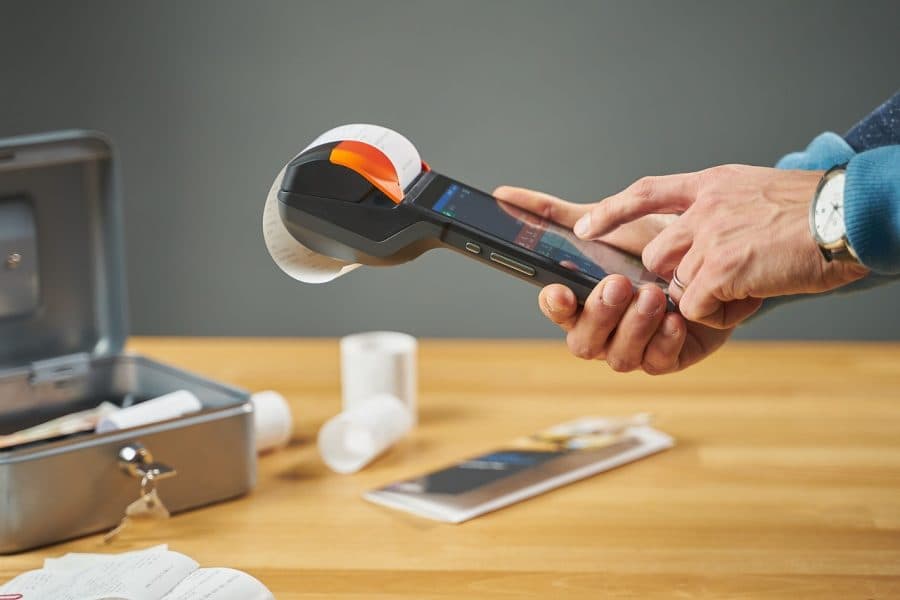
- VRP (virtual cash register): A free solution from the Financial Administration. It is a mobile app available for both operating systems, iOS and Android. With the VRP, the entrepreneur can additionally buy a printer for printing receipts, or a complete device with the VRP app and a payment terminal.
The obligation to connect the cash register to the Financial Administration portal took effect under the law on 1 January 2020, after several delays related to the certification of manufacturers and distributors. Since that date, everyone who falls into the category defined by the ERP Act must send their sales to the eKasa portal without delay. Otherwise, they face penalties.
Who is required to record their sales?
Persons who meet all of the following conditions at the same time are required to record their sales through an eKasa cash register:
- they are an individual or a legal entity authorised to do business and carry on business activity in the territory of the Slovak Republic;
- at the same time, this person sells goods or services (listed in Annex 1 to the ERP Act);
- they receive payment for these goods and services in cash or as an advance payment. This covers all sales received in cash, by payment card or in meal vouchers.
If you sell goods for cash, or payment is made by payment card, this obligation always applies to you.
If you provide services, the law specifies exactly which services this obligation applies to. The condition that you receive payment for these services in cash still applies.
- Maintenance and repair of motor vehicles
- Sale, maintenance and repair of motorcycles and their parts and accessories
- Taxi services
- Other passenger land transport n.e.c., only for the operation of cable cars, funiculars and ski lifts, if they are not part of urban, suburban or metropolitan transport systems
- Service activities incidental to land transport, only for the operation of parking facilities
- Hotels and similar accommodation
- Holiday and other short-stay accommodation
- Camping grounds, sites for caravans and campervans
- Other accommodation
- Restaurants and mobile food service activities
- Food catering
- Other food service activities
- Beverage serving activities
- Life insurance
- Non-life insurance
- Legal activities
- Accounting and auditing activities, bookkeeping; tax consultancy
- Management of companies
- Public relations and communication services
- Business and management consultancy services
- Architectural activities
- Engineering activities and related technical consultancy
- Technical testing and analysis
- Advertising agencies
- Sale of broadcasting time
- Market research and public opinion polling
- Specialised design activities
- Photographic activities
- Translation and interpreting activities
- Veterinary activities
- Renting and leasing of cars and light motor vehicles, except rental under a hire-purchase agreement
- Renting and leasing of recreational and sports goods, except rental under a hire-purchase agreement
- Renting of video tapes and discs, except rental under a hire-purchase agreement
- Renting and leasing of other personal and household goods, except rental under a hire-purchase agreement
- Activities of employment placement agencies
- Activities of temporary employment agencies
- Other provision of human resources
- Travel agency activities
- Tour operator activities
- Other reservation services and related activities
- Private security services
- Services related to the operation of security systems
- Investigation services
- Hospital activities
- General medical practice activities
- Specialist medical practice activities
- Dental practice
- Other healthcare
- Operation of sports facilities
- Activities of sports clubs
- Fitness centres
- Activities of funfairs and amusement parks
- Repair of computers
- Repair of communication equipment
- Repair of consumer electronics
- Repair of household appliances and home and garden equipment
- Repair of footwear and leather goods
- Repair of furniture and home furnishings
- Repair of clocks, watches and jewellery
- Repair of other personal and household goods
- Washing and dry-cleaning of textile and fur products, except the hire of linen, work clothing and laundry-related items, the supply of nappies and washing and cleaning services provided at the customer’s premises
- Hairdressing and beauty services
- Funeral and related services
- Physical well-being services
- Other personal services, only for dog grooming, pet care services, animal hotels, wedding agency services and tattoo and piercing studios.
Exemptions from using an eKasa cash register
Sales of:
- stamps and similar items of value (ceniny)
- coins made of precious metals
- postage stamps at a stamp exchange
- goods through vending machines
- goods sent cash on delivery
- supplementary goods related to postal services
- goods and services on board rail, air, water and bus transport vehicles
- goods by an individual with a severe disability (“ŤZP”); this does not apply if the payment is received on behalf of such a person by an individual who does not have a severe disability
- live animals (except aquarium fish, exotic animals, snakes, hamsters and other rodents)
- goods sold in high-mountain facilities that are not connected to the road network or the public electricity grid,
- goods produced as part of pupils’ practical training
- in high-mountain facilities that are not connected to the road network or the public electricity grid,
- as part of pupils’ practical training.
services provided:
- by an individual with a severe disability; this does not apply if the payment is received on behalf of such a person by an individual who does not have a severe disability (as with the sale of goods, the person must hold a severe disability card, or a severe disability card with a companion, and must be able to present it in the event of an inspection; an officially certified photocopy of the card is also accepted),
- in high-mountain facilities that are not connected to the road network or the public electricity grid,
- as part of pupils’ practical training,
- through vending machines (e.g. parking services sold through machines).
If an entrepreneur is not required to record sales in eKasa, that is, falls under the exemptions listed in the legislation, they must display at every point of sale a statement informing customers that, under the ERP Act in force, they are not required to use eKasa. This statement must be unambiguous, easy to understand, easily accessible and clearly legible for the customer.
Sanctions and fines for failing to use eKasa. The ERP Act lays down measures for several dozen administrative offences, for which fines are imposed or further sanctions may be applied, including the potential revocation of the trade licence.
If an entrepreneur did not start using eKasa to record sales without undue delay after it was introduced, or uses an eKasa client that does not meet the requirements of the law to record income, the tax office or customs office may impose a fine ranging from €330 to €3,300. For repeated breaches of these obligations, a fine ranging from €660 to €6,600 may be imposed. The tax office or customs office also has the right to submit a proposal to revoke the trade licence for the specific activity in which the law was breached.
More articles
All articles →
Finance and financial management · February 9, 2026
Cash flow: how to manage the flow of money in a small company
Cash flow in a small company: how to monitor the flow of money, plan payments and avoid secondary insolvency. Practical tips and tools. We can help.
Read article →
Finance and financial management · February 7, 2026
How to put together a business plan that works
How to put together a business plan that works: structure, the financial plan and the most common mistakes. Get solid supporting material for your bank and investors. We can help.
Read article →
Finance and financial management · February 5, 2026
Financial indicators every entrepreneur should track
Financial indicators every entrepreneur should track: liquidity, profitability and debt explained simply. Measure the health of your company. We can help.
Read article →